
On Identity

We are born into names. We are given names. We choose names.
But names are not just words; they are identities. They share with us who we are supposed to be, how we are supposed to behave, who we are supposed to love, what we are supposed to want. They create boundaries as much as they define us.
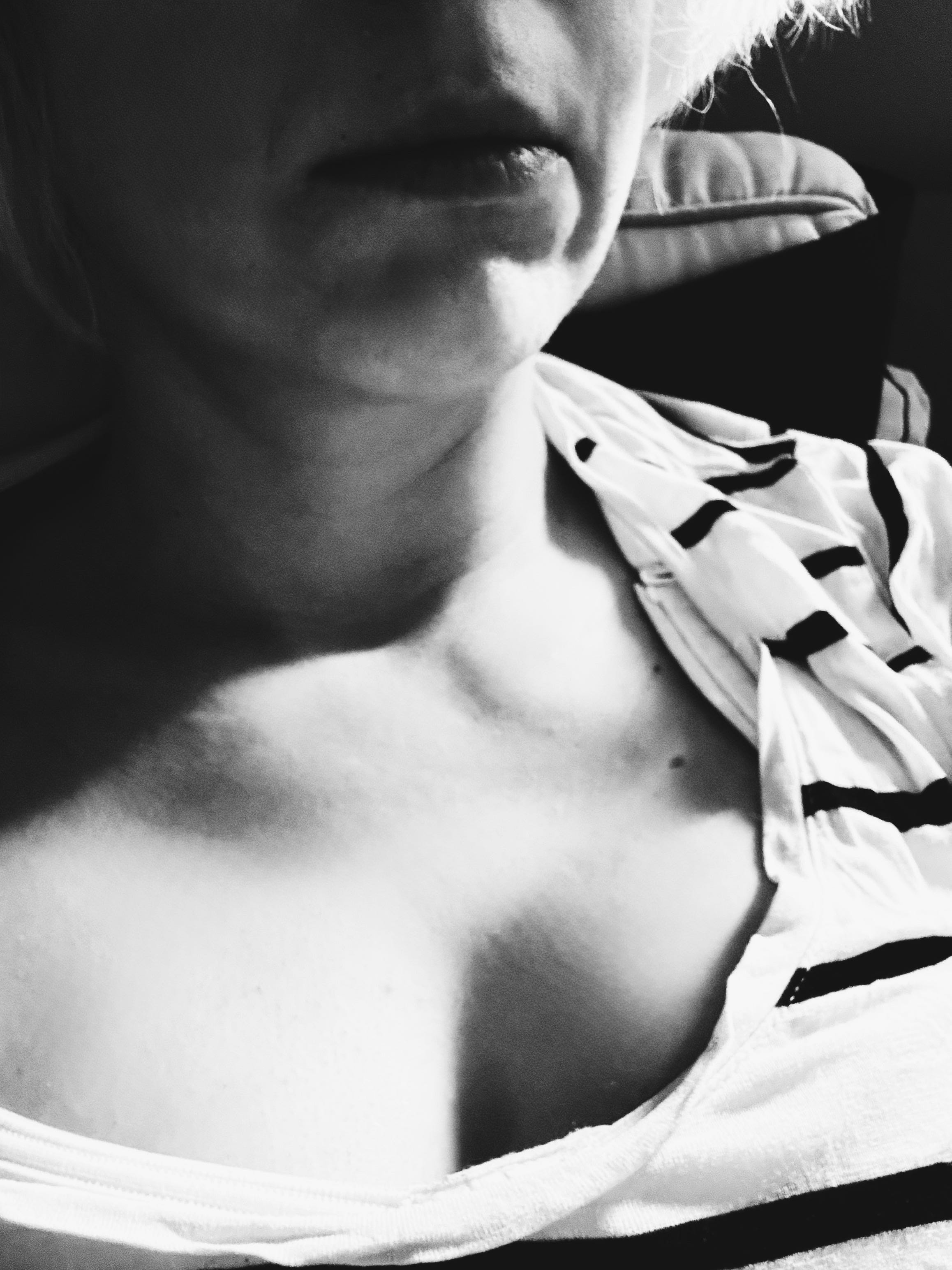
I am Mallory.
I am a daughter.
I am a sister.
I am a Mom.
I am an artist, a curator, an arts administrator.
I am a gardener, a reader, a backpacker.
I remember when I was pregnant with my son. Knowing that I’d soon have a new name, a new identity that I’d carry for always. We - each of us - giving each other names. I chose his, and he chose “Mama,” then “Mommy,” then “Mom,” a name that belonged to him as much as it did to me. A name that will last long after I am gone.
It is a name that holds more than love. It holds permanence, safety and selflessness, the ability to give without expectation. It became a role that defined me. (No matter what I do, it will always be my favorite.)
Mother. Artist. Daughter. Survivor.
These are not just words - They are our boundaries lines, shaping who we are, what we do, and how we act through new parameters and landscapes. They dictate how we act, how we feel, who we love, and what we grieve. To be called “artist” is to carry the weight of visibility, the expectation to create and contribute. It demands output, as if creativity is only valuable when it is seen.
To be “mother” requires more than love. It asks for patience, endurance, sacrifice. It demands strength, even when you are depleted. It is a name that asks for your heart to live, breathe, move, grow outside your body - in another.
Cancer brings new names.
Previvor. Thriver. Survivor.
Breast cancer shatters identity. You are no longer just a mother, or an artist, or a woman. You become patient, sick, dependent, vulnerable. You become a body in revolt, a narrative interrupted.
How do I hold all that I am? How do I hold this new name? How can I carry it all?
Breast cancer fractures the self. It dismantles identity, scattering its pieces. Cancer doesn’t discriminate. It demands reconstruction but offers no blueprint.
You are tasked with rebuilding yourself from fragments, from memories of who you were and guesses of who you might become. A new normal. You are becoming, unbecoming, becoming again.
The body changes beyond recognition - becomes untrustworthy, a reminder of vulnerability, of mortality. It is cut, scarred, reshaped, marked by incisions, drains, burned by radiation. It is hair falling out in clumps, eyebrows vanishing, nails turning brittle. It is menopause at thirty-two, hot flashes and joint pain, osteoporosis lurking in the future. It is living in a body that is both yours and not yours.
A body that feels achingly alien, other, a stranger you must learn to inhabit.
Moments Shared by Survivors:
“I lost my entire identity.”
~ 25-year-old Survivor
“My treatment gave me multiple chronic conditions, and now I’m bed bound. I can’t work now. I’ve lost my passions, my career, everything. It’s a grief no one understands unless you’re in it.”
~ 42-year-old Survivor
“I’ve been on hormone therapy that put me into menopause at 34. I was oblivious to how fast the medication would change me, my brain, my life.”
~ 34-year-old Survivor
Identity is relational. It exists in the spaces between us. But what happens when those spaces are filled with fear, with uncertainty, with grief? Who are you when others can’t see you past your illness?
Breast cancer changes how others see you, and how you see yourself. You become “sick,” “fragile,” “in need of care.” Relationships shift. You are no longer just a partner, an artist, a reader, a daughter - but a patient. Not just a mother, but a survivor. You are no longer who you were, and they don’t know how to relate to who you are becoming.
Friends disappear, unable to face their own fears of mortality. Your child sees you with fear, realizing for the first time that you are not invincible. Your partner touches you with hesitation, unsure of this new body, unsure of what is allowed, what is safe.
Moments Shared by Survivors:
“I feel like I’m always waiting. Waiting for the next scan, waiting for the other shoe to drop. I don’t know how to live like this. I don’t know if I’m living at all.”
~ 37-year-old Survivor
“I’m in remission, but I can’t move on. Every ache, every pain, I wonder if it’s back. I’m always looking over my shoulder. I’m always afraid.”
~ 45-year-old Survivor
To be a Survivor is to live with the awareness of the shadow of death. To know that survival is conditional, temporary, never guaranteed. It is to carry the weight of your own mortality, every single day. It is to grieve your own life while you are still living. It is to hold your child, knowing that you might not see them grow up. It is to love fiercely, desperately, knowing that time is limited. It demands authenticity in the cruelest way, by reminding you that you are temporary.
Zygmunt Bauman, a Polish sociologist and philosopher, was known for his profound exploration of modernity, identity, and social change. His most influential concept, liquid modernity, describes the fluid and constantly shifting nature of contemporary society, where traditional structures and anchors of identity have eroded. In this liquid state, individuals are compelled to continuously redefine themselves, constructing and deconstructing their identities in response to changing social contexts.
Identity, in Bauman’s view, is not a fixed entity but a process of constant negotiation, adaptation, and reinvention. New names, new definitions. He encapsulates this dynamic state by stating, “We are always in the process of becoming and unbecoming.”
This notion of becoming and unbecoming resonates powerfully in the context of breast cancer, where identity is fractured by the disease’s temporal disruptions. Breast cancer interrupts the linear progression of time, forcing a person’s identity to straddle a chasm between before and after, with no continuity in between.
The self becomes fragmented, living in isolated moments defined by scan to scan, treatment to treatment, remission to recurrence. In Bauman’s terms, the fluidity of identity is intensified, as each medical milestone compels a renegotiation of self, oscillating between states of health and illness, hope and fear.
Breast cancer thus amplifies the experience of becoming and unbecoming, where identity is constantly reconstructed amidst uncertainty. It is not just the body that undergoes transformation but the entire narrative of selfhood. The present becomes precarious, suspended between a past that is irretrievable and a future that is unknowable. In this liminal space, Bauman’s philosophy of liquid modernity reveals the existential weight of living with breast cancer, where identity is perpetually in flux, shaped by the relentless cycle of medical surveillance and the anticipation of recurrence.
Time becomes cyclical, repetitive, never linear. Days are measured by side effects, weeks by appointments, months by survival statistics. Time fractures, splitting into before cancer and after. You exist in the in-between, never fully past it, never fully free. There is no end point. No resolution.
Survivorship is not a conclusion; it is a state of suspension. It is a metaphorical waiting room for always - Waiting for the next test, waiting for results, waiting to feel normal again, waiting for the pain to stop, waiting to know what to do, waiting for resolution. You are waiting, always waiting, for the other shoe to drop.
To be a Survivor is to live in anticipation. To carry the weight of what might happen, even as you try to live in the now. To hold joy and fear, hope and grief, life and death - all at once.
Survivorship is a state of becoming that never resolves into being. It is living in a body that is constantly changing, constantly threatening to betray you. It is a narrative without conclusion, a story that refuses to end.
You see: Breast cancer forces a confrontation with mortality. It is a reminder that life is temporary, that bodies fail, that time is finite.
My life - this life - breaks open.
We are born into names. We are given names. We choose names. But sometimes, names are chosen for us. Sometimes, they are thrust upon us, and we are forced to carry them. Sometimes, we are named by a disease, by a body that turns against itself, by a threat we cannot control.
I am all of these names, and I am more. I am the contradictions. I am the in-betweens. I am the person still standing, even when the roles don’t fit.
I am becoming, and unbecoming, and becoming again.
“Becoming and unbecoming and becoming” is a keen depiction of life as unceasing transformation. Thank you. When do you think the transformation ends? This essay with the motion of ocean waves revealed in night and day light is timeless. Death is not the end. I observe the seasons, composition decomposition and recomposition. My solitary ego resists the transformation “becoming unbecoming and becoming” from fear of extinction. Identity, like Mallory describes, is not incorrigible. Identity is malleable, it fills the opening and defines containment, contentment, and being. I fear this ceaseless transformation life is. And I love it. Thank you.